Europe confronts an Ariane 6 launch-capacity squeeze
The 348-satellite IRIS² programme and rising sovereign demand are testing whether Europe's launcher industry can increase cadence without weakening reliability.
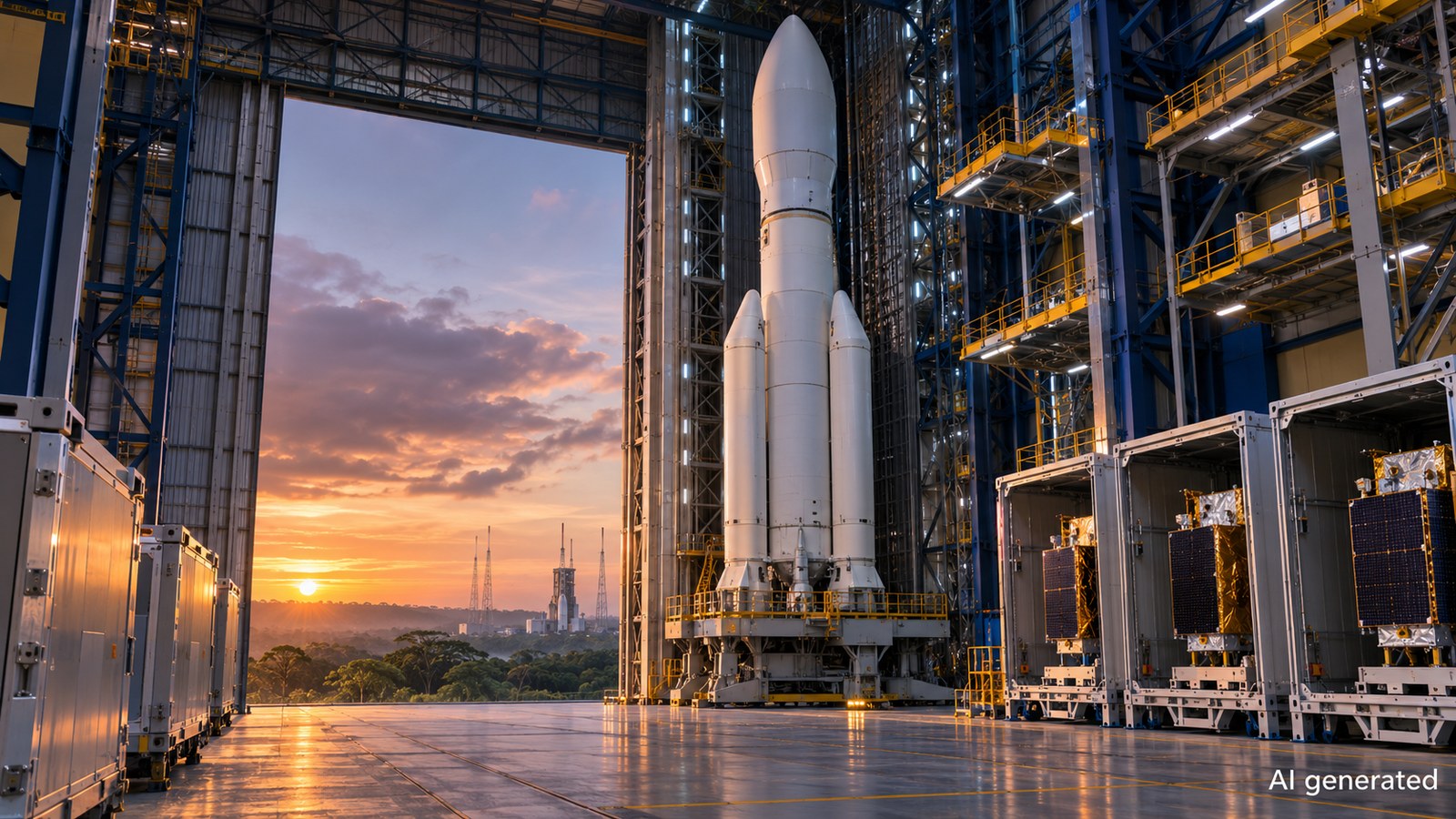
Europe's plan for autonomous access to space is running into a capacity question: can Ariane 6 launch often enough for the IRIS² communications constellation and other government missions? The issue has become more urgent as European institutions seek to reduce dependence on non-European providers for sensitive infrastructure.
The European Commission says IRIS² is designed around 348 satellites and an integrated government and commercial communications system. An implementation agreement announced in August covers satellite deployment, launch services and ground infrastructure. That makes launch cadence a programme dependency, not a separate industrial talking point.
A constellation makes cadence strategic
Reuters reported in September that the European Space Agency was considering an acceleration as satellite demand peaks around 2030. Current planning pointed towards nine or ten Ariane 6 missions a year, while Le Monde reported that demand could require a rate in the low-to-mid teens. These are planning ranges, not completed annual output.
Raising cadence is not simply a matter of booking more launch dates. ArianeGroup's industrial network spans hundreds of suppliers, and launcher stages, solid-rocket boosters, production facilities and the French Guiana launch base must move together. A bottleneck in one component can delay the whole schedule.
The bottleneck is industrial
La Tribune reported an ESA trajectory of roughly 12 launches a year by the end of 2029 and potentially 15 beyond 2030, with booster production among the constraints. Le Monde also described infrastructure and supply-chain limits. Those reports show ambition, but reliability and verified readiness remain more important than a paper target.
Commercial competition adds pressure. SpaceX dominates the current launch market, while European policymakers want sovereign payloads to have a dependable European route. That does not mean every European satellite must fly on Ariane 6, but reliance on a competitor whose capacity and sales policy Europe does not control creates strategic exposure.
Sovereignty needs a reliable schedule
The practical test will be annual flights delivered safely, booster and stage availability, firm IRIS² deployment contracts and transparent milestones at the spaceport. Europe's challenge is not to imitate a headline launch rate overnight. It is to turn public demand into a durable industrial rhythm that customers can schedule and governments can rely on.
Sources & context
Reporting and reference material used for this article. Context sources do not independently confirm every news claim.
- European Commission ↗Primary programme material, published 7 August 2026: IRIS² architecture, 348-satellite plan and implementation scope.
- Reuters via StreetInsider ↗Independent reporting, published 2 September 2026: ESA cadence review, demand peak and existing annual planning range.
- La Tribune ↗Specialist reporting, published October 2026: ESA's 2029 and post-2030 cadence aims and booster constraint.
- Le Monde ↗Independent reporting, published 3 November 2026: required launch range, industrial network and autonomous-access context.
Written for WHIF from the linked material. This article does not claim on-the-ground reporting. Our editorial standards.