Pégase 26 tests a new Arctic route for French air power
A 40-day French Air and Space Force mission is using Greenland and Alaska for the first time before continuing across the Indo-Pacific. It is not a nuclear exercise.
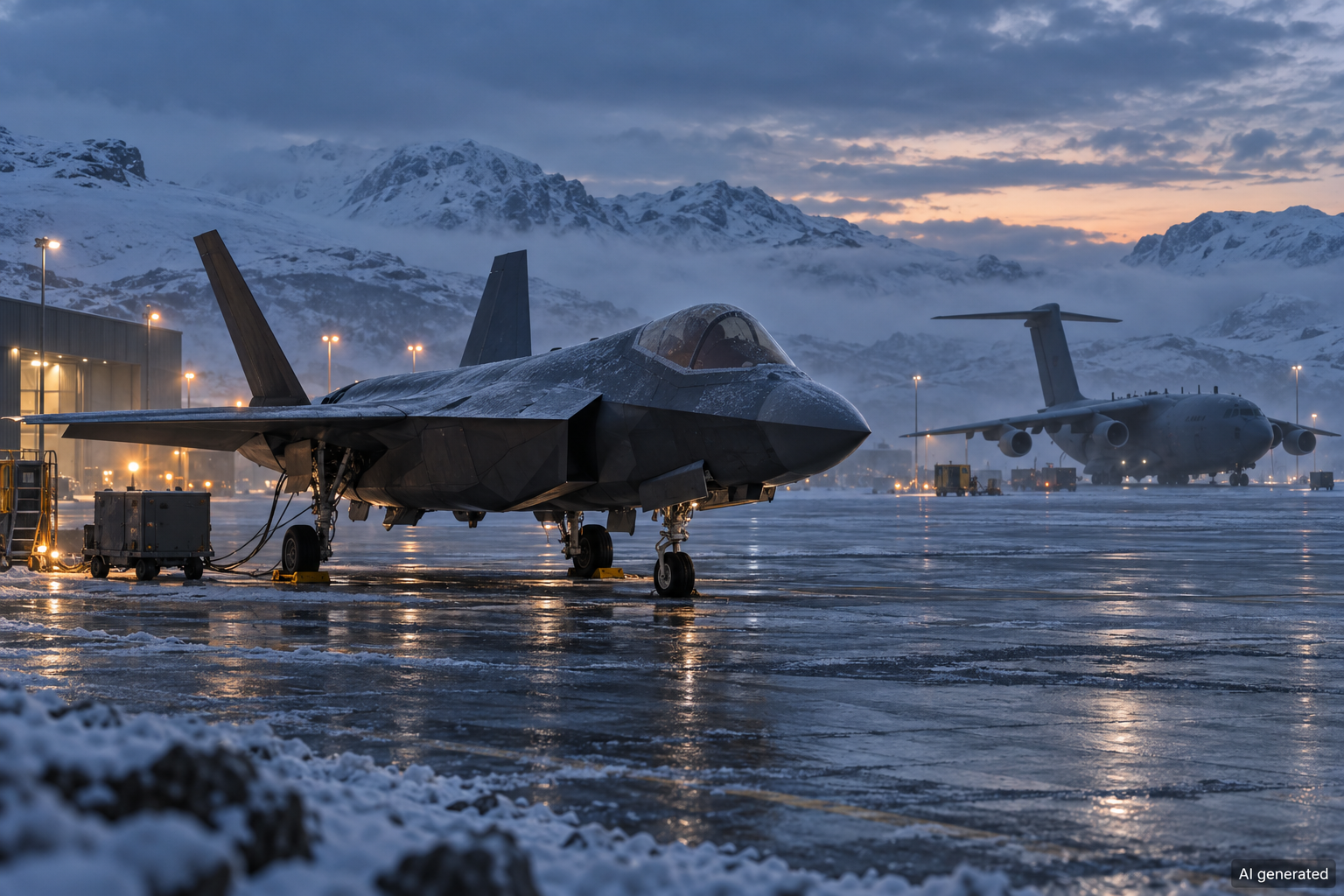
France's Pégase 26 mission has opened a new northern route through Greenland and Alaska as part of a 40-day deployment spanning more than 40,000 kilometres. The French Air and Space Force says this is the first Pégase mission to use the Arctic corridor before continuing toward Asian partners.
The force package comprises four Rafale fighters, three A330 MRTT tanker aircraft, two A400M transports and about 300 personnel, according to the Defence Ministry. The main contingent left Istres on 8 September. An advance A400M team had already assessed stops at Kangerlussuaq and Pituffik in Greenland and Eielson Air Force Base in Alaska.
Why the northern passage is different
The first long leg from southern France to Alaska took about eleven hours. The ministry describes the Arctic route as an alternative to the southern itinerary used in earlier editions. Cold weather, limited diversion airfields and search-and-rescue planning make it a test of logistics as much as a display of aircraft range.
From Alaska, the published itinerary continues through Japan, South Korea, Indonesia and India, then toward Réunion and the Middle East. French crews are scheduled to train with partners and participate in multinational exercises, including Tarang Shakti in India and Amun in Egypt. Those are planned stages; completion should not be assumed before official or independent confirmation.
Strategic reach without a nuclear exercise
Associated Press reports that Pégase has been organised annually since 2018 and places this year's route in the context of France's effort to demonstrate rapid deployment and maintain defence relationships across the Indo-Pacific. The ministry presents the northern passage as evidence that its forces can reach the region by more than one axis.
One point requires clarity. Although crews from France's strategic air forces are participating, AP reports that Pégase 26 is not a nuclear exercise: the aircraft carry mock conventional loads and no real weapons for the deployment. Participation by a unit with a nuclear mission should not be converted into a claim that nuclear weapons are involved.
The mission's value will be judged after its later stages: whether aircraft and crews complete the route, integrate with partners and manage the demands of multiple climates and airspaces. For now, the verified development is the launch and completion of the first Arctic leg, not the success of the entire 40-day itinerary.
Sources & context
Reporting and reference material used for this article. Context sources do not independently confirm every news claim.
- French Defence Ministry — Pégase 26 launch, 9 September 2026 ↗Primary material: force package, distance, duration and planned itinerary
- French Defence Ministry — first stage through the Arctic, 11 September 2026 ↗Primary operational update from the same institution: route and completed first leg
- Associated Press — French aircraft use Arctic route, 11 September 2026 ↗Independent reporting and context: mission history, strategic framing and non-nuclear clarification
Written for WHIF from the linked material. This article does not claim on-the-ground reporting. Our editorial standards.