TGV M enters passenger service after a two-and-a-half-year delay
The fifth-generation train begins a limited Paris to Marseille schedule on 6 November, promising more seats and lower energy use rather than a higher top speed.
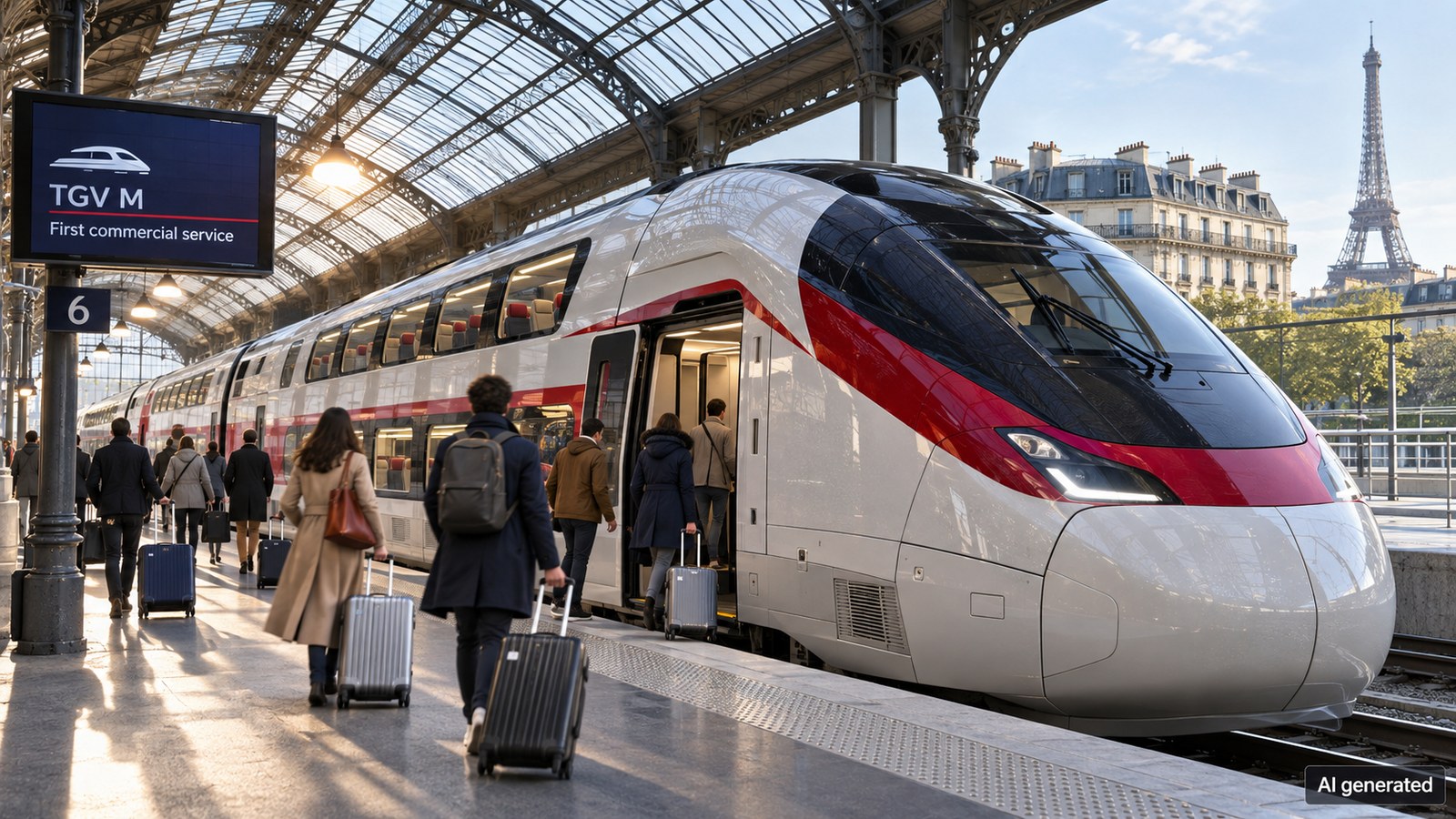
France's fifth-generation high-speed train, the TGV M, carries paying passengers for the first time on Friday 6 November between Paris and Marseille. SNCF says the initial deployment uses six trainsets for one daily return journey. It is a controlled introduction rather than an overnight replacement of the existing TGV fleet.
The start comes roughly two and a half years later than the original commercial timetable, AFP reports. Alstom and SNCF spent the intervening period completing tests, certification and operational preparation. The European Union Agency for Railways granted market authorisation in May 2026, after trials that Alstom says began in 2023.
More seats, not more speed
The train's case is capacity and efficiency, not a new speed record. AFP reports a commercial maximum of 320 kilometres per hour, similar to current French high-speed service. The operator says the train can carry about 20 percent more passengers and use about 20 percent less energy. Those are manufacturer and operator performance claims that will need confirmation across regular service conditions.
A modular design allows SNCF to change the balance between first and second class and to reconfigure interiors over the train's life. The power cars are shorter, leaving more room for passengers, while accessibility and onboard connectivity have been redesigned. SNCF also projects maintenance costs about 30 percent lower than for the previous generation.
A fleet transition measured in years
The order is industrial as well as operational. AFP says SNCF has ordered 160 trainsets worth more than 5 billion euros, with delivery extending into the early 2030s. The first route was chosen to gather experience on one of the network's busiest long-distance corridors before the fleet expands to other destinations.
For passengers, the immediate effect is modest. A single daily return does not resolve crowding, punctuality or ticket-price pressure across the network. Travellers should also distinguish the train's launch date from broad availability: most Paris to Marseille services will continue to use existing rolling stock during the ramp-up.
The first run is only the start
The TGV M therefore begins as a long-term infrastructure bet. Its success will depend less on the ceremony of the first run than on reliable deliveries, real energy and maintenance performance, and whether the extra seats translate into useful capacity. Friday provides the first commercial evidence, not the final verdict.
Sources & context
Reporting and reference material used for this article. Context sources do not independently confirm every news claim.
- SNCF Voyageurs ↗Primary operator information, consulted 6 November 2026: first-service date, initial six-train deployment, capacity, energy and maintenance claims.
- AFP via Boursorama ↗Independent wire reporting, published 6 November 2026: delay, first route, top speed, order size and fleet schedule.
- Le Progrès ↗Independent regional reporting, published 6 November 2026: launch timing, limited initial service and passenger implications.
- Alstom ↗Primary manufacturer context, published 12 May 2026: market authorisation and the testing timeline.
Written for WHIF from the linked material. This article does not claim on-the-ground reporting. Our editorial standards.